A Maverick of Hollywood’s Golden Age
Howard Winchester Hawks, born on May 30, 1896, in Goshen, Indiana, emerged as one of the most influential filmmakers in Hollywood history. Born on Decoration Day (now Memorial Day), Hawks grew up surrounded by privilege and ambition. As the first child of Franklin Winchester Hawks and Helen Brown Howard, his childhood was defined by wealth, opportunity, and a relentless drive for excellence that would later define his illustrious career.
A Privileged Start
Hawks’ early years were split between Goshen, Indiana, and Neenah, Wisconsin, where his maternal grandfather, C.W. Howard—a wealthy industrialist in the paper industry—shaped much of his childhood. C.W. not only provided the young Howard with material luxuries but also encouraged a spirit of independence and adventure in both Howard’s mother, Helen, and her sister, Bernice. These pioneering women were ahead of their time, driving cars and even taking an interest in aviation. Their strong, independent personas left an indelible mark on Hawks, inspiring the creation of the iconic “Hawksian women”—smart, confident, and self-reliant female characters that would become staples of his films.
In 1910, the Hawks family moved to Pasadena, California, where Howard’s horizons expanded. Spoiled by his grandfather with gifts ranging from a race car to flying lessons, young Howard developed a love for speed, risk, and adventure. These passions would not only shape his personal life—manifesting in hobbies like auto racing and aviation—but also inform the daring, adrenaline-fueled themes of his films.
From Engineering to Hollywood
Hawks was educated at Philips Exeter Academy and later studied mechanical engineering at Cornell University. However, his summers spent working in Hollywood set the stage for his true calling. It was during these stints that Hawks began immersing himself in the art of filmmaking, even catching the eye of Douglas Fairbanks after impressively building a set for one of his productions. This chance encounter fueled Hawks’ ambition to climb the ladder in the film industry.
After serving as a pilot in World War I, Hawks returned to Hollywood and worked in various roles—editor, casting director, screenwriter—until he finally directed his first film, The Road to Glory (1926). While his early career was marked by silent films, it was the transition to sound that allowed Hawks to truly showcase his talent.
A Trailblazer Across Genres
Hawks cemented his name with Scarface (1932), the groundbreaking gangster film produced by Howard Hughes. The film’s gritty violence and sharp wit pushed the boundaries of Hollywood storytelling and established Hawks as a visionary filmmaker.
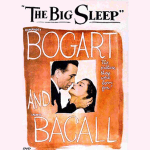
From there, Hawks proved to be a master of versatility, crafting timeless classics across multiple genres. In screwball comedies like Bringing Up Baby (1938) and His Girl Friday (1940), Hawks delivered lightning-fast dialogue and explored societal norms with biting humor. In dramas like Only Angels Have Wings (1939), Sergeant York (1941), and The Big Sleep (1946), he delved into themes of loyalty, camaraderie, and moral codes.
Hawks also shone in action films and Westerns, with Red River (1948) and Rio Bravo (1959) solidifying his reputation as a filmmaker who could blend tension, drama, and human emotion seamlessly. Even in science fiction, he made his mark, producing the influential The Thing from Another World (1951).
The “Hawksian” Approach
What set Hawks apart was his unerring focus on relationships and human dynamics. Whether crafting a high-stakes action film or a screwball comedy, he emphasized camaraderie, professionalism, and personal honor. His action films often centered on tight-knit groups of experts working under pressure, while his comedies explored the dynamics of gender and societal expectations.
Hawks was also celebrated for his unique approach to female characters. The “Hawksian woman”—strong, witty, and capable—stood toe-to-toe with their male counterparts, a rarity in Hollywood at the time. These characters reflected Hawks’ belief in equality, showcasing women as partners and equals in a male-dominated world.
Working with Legends
Hawks had an uncanny ability to bring out the best in his actors, whether they were seasoned veterans or rising stars. His collaborative, easygoing approach encouraged improvisation and authenticity, helping to launch and solidify the careers of icons like Lauren Bacall, Carole Lombard, and Montgomery Clift. He also played a pivotal role in shaping John Wayne’s stardom, giving him one of his most iconic roles in Red River (1948).
Another hallmark of Hawks’ films was his sharp, rapid-fire dialogue. Often overlapping and delivered at breakneck speed, this style added a sense of realism and energy to his scenes, becoming one of his most recognizable trademarks.
A Legacy of Independence
By the 1950s, Hawks had become a quintessential “Hollywood professional,” a director who could tackle any genre with unparalleled skill. Unlike many filmmakers of his era, he managed to maintain a remarkable level of independence, working for every major studio while retaining his creative freedom—a feat during Hollywood’s era of rigid studio control.
His body of work remains a testament to his versatility, with classics spanning Film Noir The Big Sleep (1946), musicals (Gentlemen Prefer Blondes), Westerns (Rio Bravo), and even screwball comedies (His Girl Friday).
Enduring Influence
Howard Hawks’ legacy isn’t just defined by the diversity of his films but by his ability to infuse style, character, and action into timeless narratives. His exploration of relationships, honor, and professionalism continues to resonate with filmmakers and audiences alike.
From the quick wit of his screwball comedies to the grit of his action-packed dramas, Hawks made films that remain as vibrant and engaging today as they were decades ago. His work has inspired countless directors and solidified his place as one of Hollywood’s greatest storytellers—a true master of the medium.
Howard Hawks didn’t just make movies—he defined an era and left a legacy that transcends time. Whether you’re laughing along with Bringing Up Baby or holding your breath during Red River (1948), you’re experiencing the brilliance of a filmmaker who understood the art of storytelling like few others.
Review Films directed by Howard Hawks
[ feedzy-rss feeds=”https://classicmovierev.com/tag/howard-hawks-dir/feed” max=”12″ feed_title=”no” meta=”no” summary=”yes” summarylength=”50″ thumb=”yes”]
Howard Hawks on iMDB.com